
The 2025 DH Symposium at the University of Ghana:
A Report
Day 1
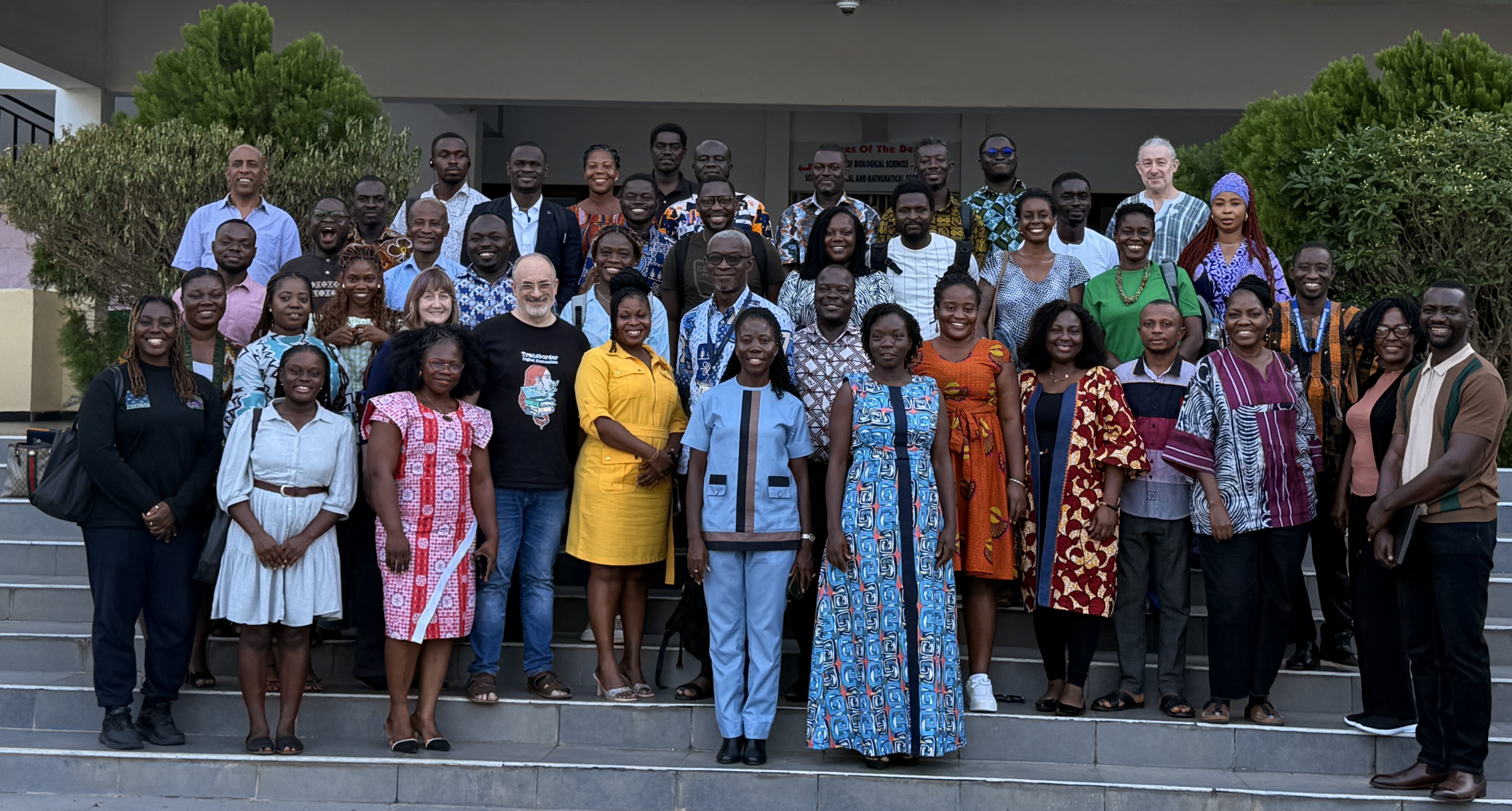
Themed around Artificial Intelligence, Libraries, and Digital Preservation in Africa, the 2025 symposium convened a diverse and multidisciplinary community of scholars, librarians, technologists, and practitioners for an in-depth exploration of the intersections between artificial intelligence (AI), libraries, and digital humanities practices. Held in-person and online at the University of Ghana for the second consecutive year, the symposium was co-organized by the University of Ghana and the University of Kansas Libraries, with support from several KU units and African initiatives. The event featured a rich array of presentations showcasing digital humanities projects and initiatives from across the continent.
The conference opened with welcome addresses by Prof. Samuel Nii Ardey Codjoe (Provost of the College of Education) and Prof. Akosua Darkwah (Dean of the School of Information and Communication Studies) of the University of Ghana, who emphasized the vital role of digital humanities in advancing African scholarship and preserving cultural heritage. Speakers from the University of Kansas—including Dr. Glenn Adams (Director of the Kansas African Studies Center), Dr. Carol Smith (Dean of KU Libraries), and Brian Rosenblum—shared insights connecting digital archives with ongoing work at KU Libraries. Dr. Smith’s remarks were especially resonant, highlighting connections between the symposium and the pre-conference networking session held with librarians from the University of Ghana’s Balme Library.
Next was a Keynote Conversation featuring Dr. Ademide Adelusi-Adeluyi (Howard University, USA) and Karen Ijumba (Open Restitution Africa, South Africa). Their discussion centered on the vital role of digital technologies in enabling the restitution and recovery of African historical-cultural records and material objects. Dr. Adelusi-Adeluyi also drew insights from her recent book, Imagine Lagos: Mapping History, Place, and Politics in a Nineteenth-Century African City, particularly exploring how digital tools can be used to recover erased histories. Both speakers further examined how these tools can help communities imagine futures that challenge imposed colonial narratives. The conversation sparked a vibrant audience engagement, leading to a lively discussion on ethical considerations in digitization, notably posing the question: “Are there things we should not digitize?”
The remainder of day 1 was devoted to four panel sessions.
Panel 1: Digitizing Memory and Expanding Access explored how digital archives are reclaiming African narratives and making cultural heritage more accessible. Seun Alli (Director, June Creative Art Advisory and Consultant, OlongoAfrica, Nigeria) examined the legacy of the landmark literary magazine Black Orpheus and its digitization; Boyega Adediran (Archivi.ng, Nigeria), highlighted Archivi.ng’s efforts to preserve Nigerian historical newspapers; George Gyesaw and Edwina Ashie-Nikoi, both from the University of Ghana, focused respectively on participatory design in archival systems, and on institutional strategies for digitization A recurring theme across the panel was the challenge of sustaining funding for digital projects, underscoring the need for collaborative models and long-term investment.
Panel 2: Reframing Knowledge Through Metadata & Method featured thought-provoking presentations on how metadata practices and methodological innovations can challenge colonial legacies and reshape African literary and cultural archives. Tinashe Mushakavanhu (Harvard University, USA) explored the role of speculation and conjecture in creating fragmented African digital literary archives. Ashley Sanders (Data Scientist, France) discussed ethical frameworks for correcting historical imbalances in data representation, and demonstrated digital tools can be used to analyze absences in Algerian archives. Niklas Hållén (Uppsala University and Karlstad University, Sweden) examined visualization techniques for mapping literary networks in East Africa. Across the panel, speakers highlighted the transformative potential of metadata and digital methods in democratizing knowledge and fostering inclusive narratives.
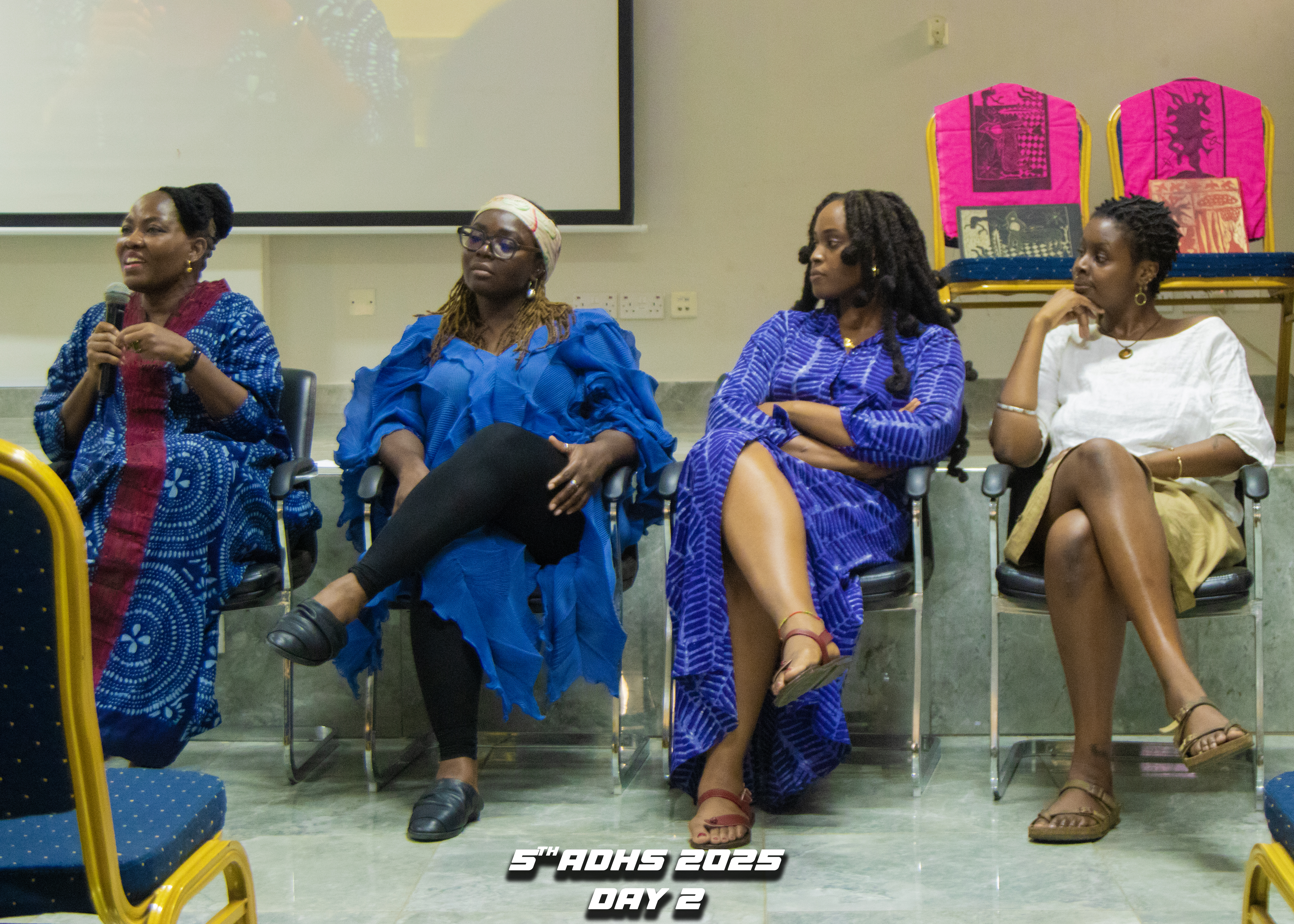
Panel 3: OlongoAfrica / Black Orpheus: Between Continuity and Cultural Amnesia offered a deeper dive into the Black Orpheus Project and its significance for African literary heritage. Featuring four speakers from the OlongoAfrica initiative in Nigeria—Seun Alli (Director, June Creative Art Advisory and Consultant, OlongoAfrica), Molará Wood (Editor-in-Chief, Black Orpheus Project), Yadichinma Ukoha-Kalu (Artist and Illustrator), and Ebunoluwa Adepoju (Sculptural Maker-Researcher)—the panel explored how the revival of Black Orpheus, a landmark mid-20th-century literary magazine, serves as both an act of cultural continuity and a response to historical erasure.
Panel 4: Francophone Voices & Language Technologies examined the role of artificial intelligence and digital tools in supporting underserved African languages and their contribution to knowledge production. Emmanuel Ngue (University of Yaoundé 1, Cameroon) highlighted the challenges and opportunities for integrating minority languages into AI-driven platforms. Augustin Ndione (Université Cheikh Anta Diop de Dakar, Senegal) followed, looking at strategies for safeguarding African linguistic diversity in the digital age. Grant McNulty (Director, iAfrika Digital, South Africa) discussed the importance of African mother-languages in shaping epistemologies and research practices, and introduced several initiatives to create and increase use of African language resources. Finally, Brigid Enchill (University of Kansas, USA) demonstrated how digital storytelling can enrich language learning and cultural engagement. Collectively, the panel underscored the transformative potential of AI and digital humanities in amplifying Francophone and indigenous voices across Africa
Day 2
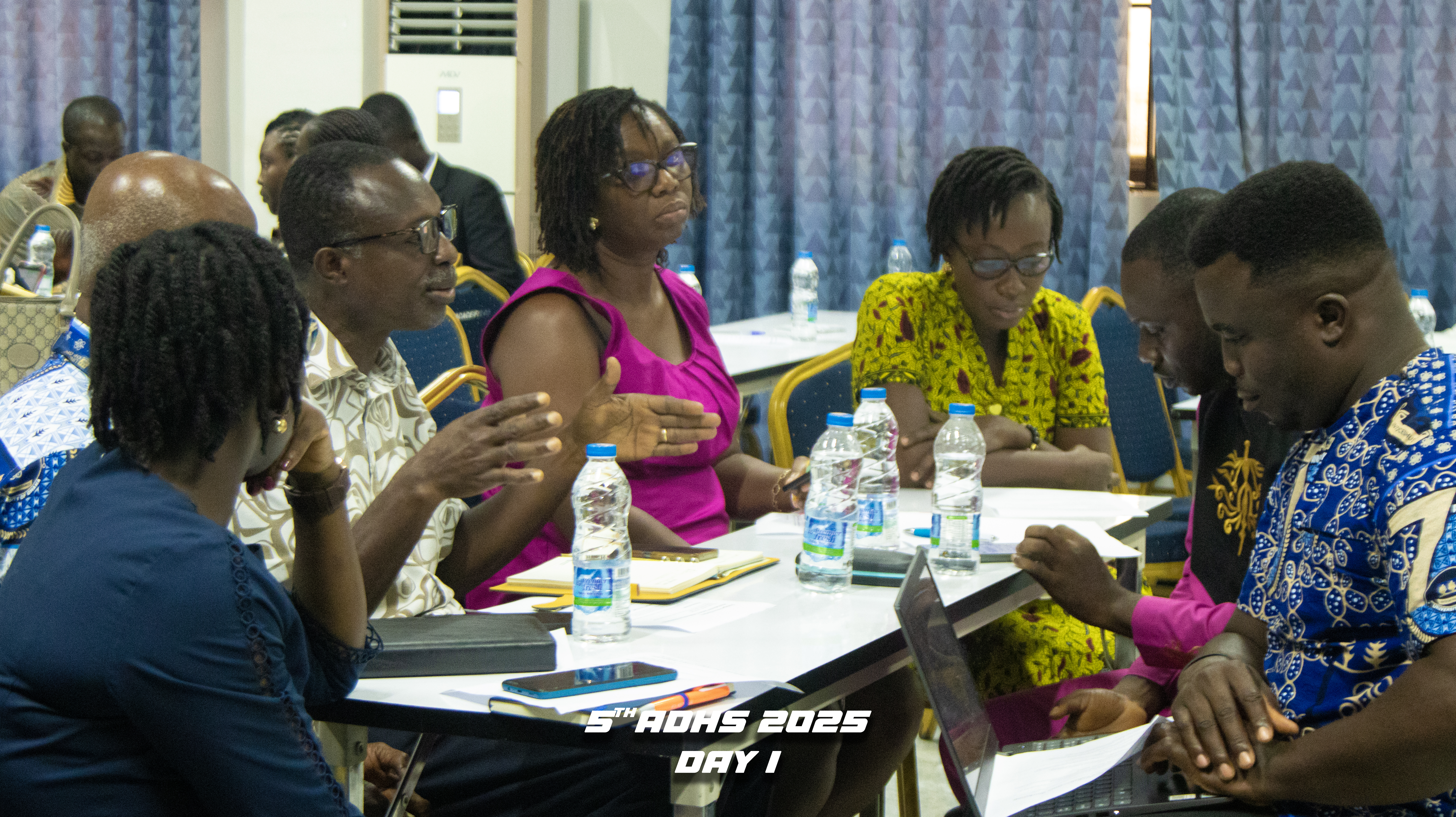
The theme of the second day, “Imagining the Future of Digital Humanities (DH) in Africa,” explored forward-looking visions for DH in African contexts with a keynote conversation led by Akosua Darkwah (University of Ghana) on “DH in Ghana: Past, Present, and Future”, and Tibebe Beshah (University of Addis Ababa, Ethiopia) on “Digital Humanities in Ethiopia: Where are we? And where are we going?” Discussions covered the continent’s unique opportunities for innovation, the role of local languages and cultural heritage in shaping DH initiatives, and the infrastructural and educational challenges that must be addressed to foster growth. The keynote set the tone for the day, encouraging participants to think critically about how DH can serve African communities while contributing to global scholarship.
Panel sessions on day 2 included:
Panel 5: Algorithms, Ethics, and Epistemologies – AI in an African Frame. This panel delved into the complex relationship between computational tools and the values that inform them. Speakers included Oluwakorede Ajibona (University of Kansas, USA), Oluwaseun Sanwoolu (University of Kansas, USA), and Frank Onuh (University of Lethbridge, Canada). Discussions examined how algorithms influence what knowledge is produced and prioritized, and how issues of bias, transparency, and accountability intersect with technological design. A central theme was the risk of digital colonialism—when African digital initiatives unintentionally replicate Western systems rather than develop indigenous alternatives. Panelists emphasized the need for culturally rooted, context-aware strategies and reminded participants that algorithms are not neutral; they reflect the biases and worldviews of their creators.
Panel 6: Libraries, Partnerships, and Digital Sustainability. This panel addressed the critical role of libraries as stewards of knowledge and active collaborators in digital humanities projects. Speakers included Carol Smith, Brian Rosenblum, and Kodjo Atiso (University of Kansas Libraries, USA), Samuel Owusu Ansah and Patience Dzandza Ocloo (University of Ghana), and Purity Kavuri-Mutuku (Kenya National Library Service). Discussions emphasized the importance of building partnerships across institutions and regions to strengthen DH infrastructure, as well as strategies for ensuring long-term preservation of digital materials. Key themes included open access policies, sustainable funding models, and capacity building for digital literacy—highlighting libraries’ central role in advancing equitable and enduring digital scholarship.
Panel 7: Global South Perspectives – Digital Humanities Across Continents. This fully virtual panel offered a comparative view of digital humanities practices across diverse Global South contexts, spanning regions from India to Argentina. Speakers included Miriam Peña Pimentel (Universidad Nacional Autónoma de México), Gimena del Rio Riande (Conicet–Universidad del Salvador, Argentina), Nirmala Menon (Indian Institute of Technology Indore, India), Alex Gil (Yale University, USA), and Tunde Ope-Davies (University of Lagos, Nigeria). Panelists shared case studies illustrating how DH adapts to different cultural, economic, and technological realities, while fostering opportunities for intercontinental collaboration. They encouraged participants to consider how knowledge exchange between regions can enrich DH research, promote inclusivity, and challenge dominant narratives shaped by Global North institutions.
Takeaways
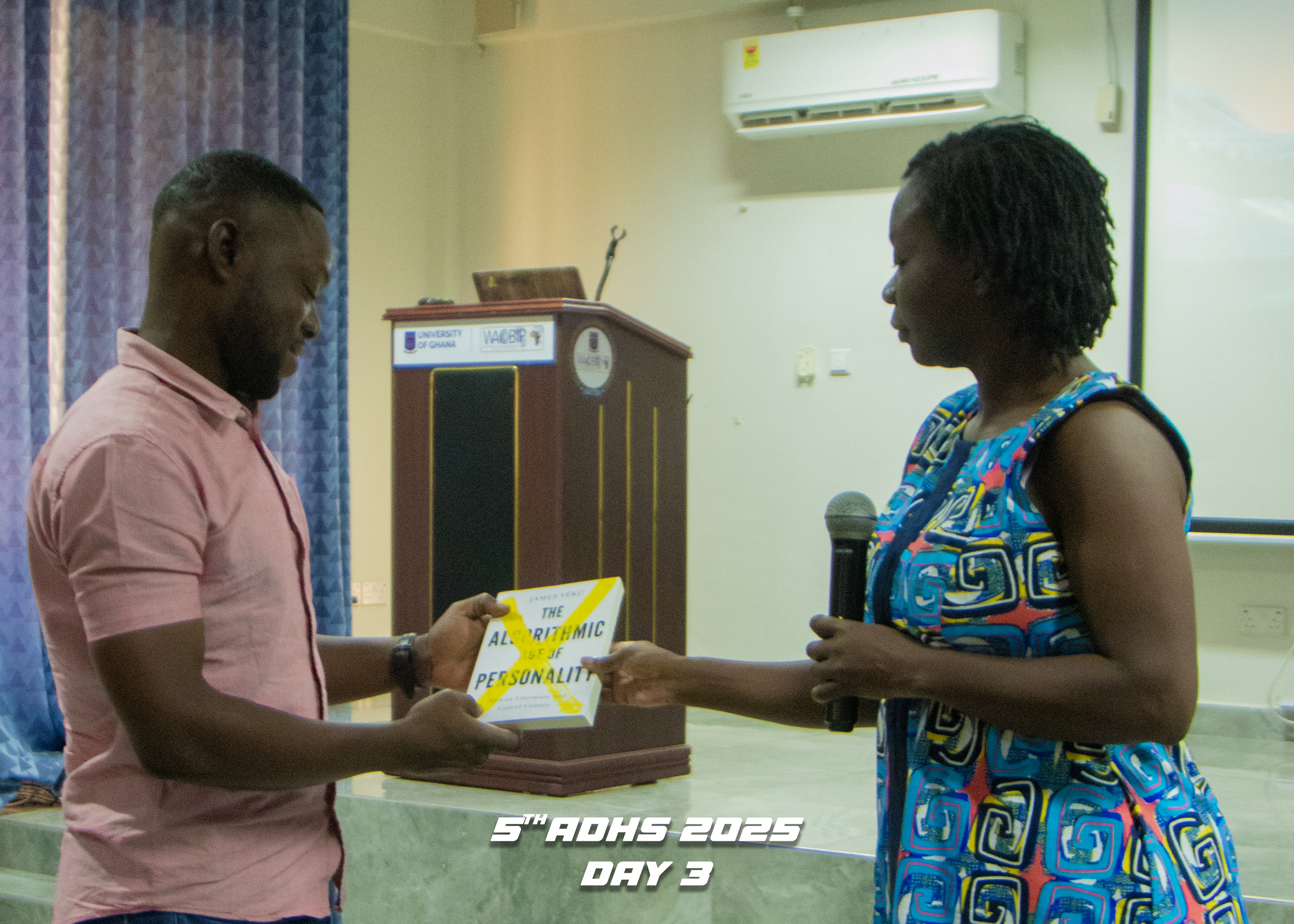
The conference concluded with collective reflection session and wrap-up that synthesized the main insights, emphasizing:
-
the urgency of preservation of African heritage materials;
-
the necessity of partnershi2ps and upskilling librarians;
-
the need to ensure inclusive digital access for underserved areas;
-
the goal of building frameworks that reflect African realities and honor indigenous language and culture;
-
and the importance of long-term, sustainable models.
The gathering successfully underscored the importance of reclaiming African narratives and envisioning a future where Africa authors its own digital story. This lively gathering fostered rich and nuanced discussions on how AI, libraries, and digital humanities intersect within the African context. These conversations provide a strong foundation for future meetings to build upon.
The event closed with cultural engagement visits to the Nketia Archives, Institute of African Studies and the Dikan Gallery in the heart of Accra .